
Ever wondered how live sports tickers show you every moment as it happens? Picture bright LED panels lighting up with scores, stats, and breaking news right on the field. This tech magic combines tough hardware with smart software to turn raw numbers into a non-stop stream of updates.
We break down the whole system, from secure data channels to digital feeds, keeping you right in the heart of the action. Ready to dive in and see what makes these displays come alive?
how do live sports tickers work: Real-Time Thrills
Live sports tickers light up the field with neat rows of LED lights. They come in all shapes, from tiny panels to massive screens stretching for feet. This cool tech feeds fans real-time scores, player stats, and breaking news as the game unfolds. Want a closer look? Check out How to Create a Live Sports Scoreboard with Buo360.
At their core, these tickers mix sturdy hardware with smart software. Think of it as a high-speed play: LED panels team up with systems that decode live data, turning raw numbers into a smooth, rolling update. Every piece, like a puzzle, fits perfectly together.
Cloud-based systems grab live streams of the action and send them via secure channels. That means every goal, foul, or surprise moment hits the screen almost instantly. Powerful feed managers juggle tons of data and update the display in near real-time. Ever felt that rush when your team makes a killer play?
This flexible setup handles any game, whether it’s a local showdown or a championship battle. It captures the game’s heartbeat and makes sure fans, in the stands or at home, don’t miss a single moment of the action.
How Live Sports Tickers Acquire Real-Time Data
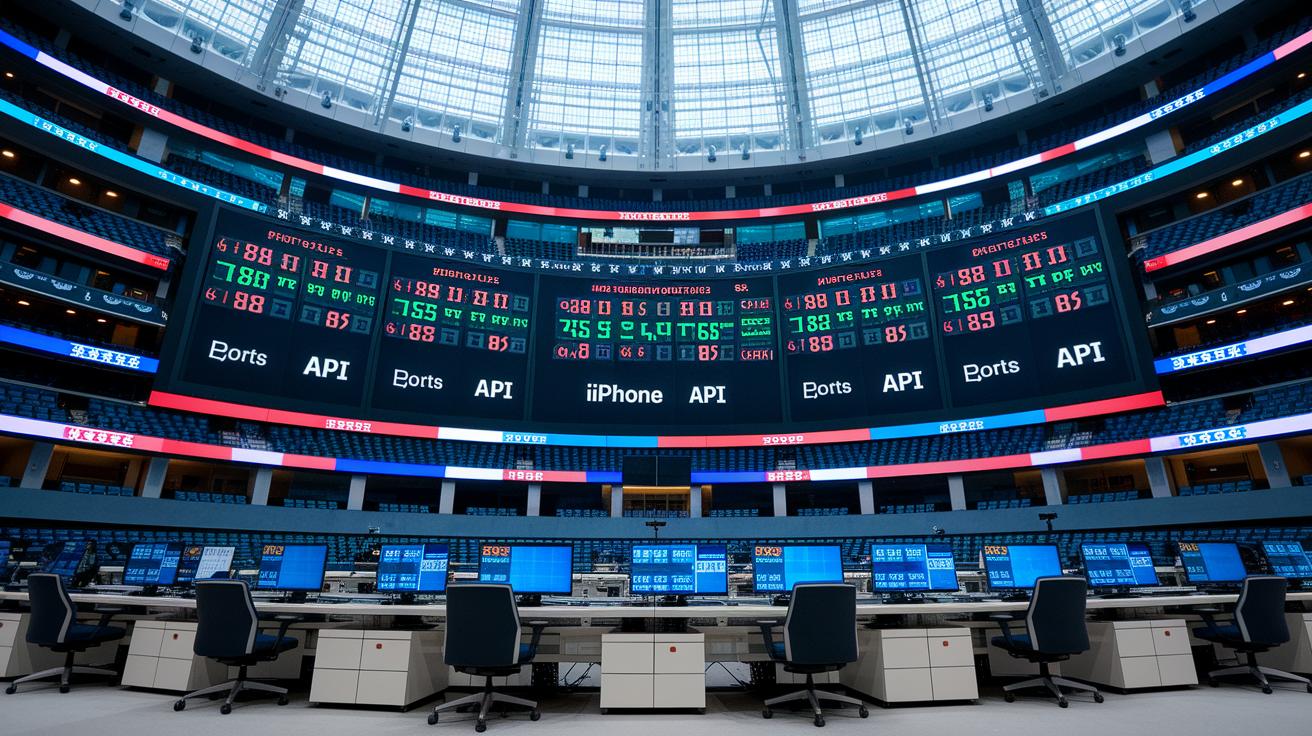
Live sports tickers pick up game updates using several quick data channels. They gather info from both official sources and the game-day community to keep every score and play fresh. One major trick is connecting to official league APIs, like the NFL Developer Portal, which gives you verified scores and event details right away. They also lean on third-party aggregators to pull data from many spots, making sure there’s no missing action. Plus, live sensor feeds from the field help verify every key moment. Sometimes, operator inputs come into play when special events happen or if automated feeds take a short break.
Data arrives via secure REST or streaming APIs that send updates instantly. Cloud-hosted feed services keep the system firing on all cylinders with high reliability and backup checks, ensuring fans catch every move in real time.
Common sources for the live data include:
| Source Type | Description |
|---|---|
| Official league APIs | E.g., NFL Developer Portal for verified game details |
| Third-party aggregators | Collect info from multiple outlets |
| Live sensor feeds | Sensors on the field providing instant data |
| Operator inputs | Manual updates during special events or outages |
| Social media and fan updates | Real-time buzz from the game crowd |
This blend of sources powers the non-stop, up-to-the-second action on sports tickers, making sure fans never miss a beat.
Live Sports Tickers and Feed Relay Mechanisms
When you're catching a live game, you need every moment streamed without delay. Live sports tickers use lightning-fast networks and tools like WebSockets (a tool for real-time online connections), MQTT (a lightweight messaging system), and TCP/IP (the standard for internet communication) to deliver updates in a flash. Whether there's one feed, two, or an all-out "Grand Slam" setup, these systems work together to keep every screen perfectly in sync. And with cloud-based messaging backing it up, fans always get the latest buzz from the game.
As soon as data comes in, it's chopped into tiny packets and decoded into display buffers, keeping the scrolling info as smooth as a play on the field. This setup means no second is lost; every whistle, foul, and goal is visible right as it happens.
| Protocol | Latency | Use Case |
|---|---|---|
| WebSockets | Very Low | Interactive live updates |
| MQTT | Ultra-Low | Sensor data and telemetry |
| TCP/IP | Low | Robust data transmission |
This relay system, through its smart decoding and buffering, makes every play come alive instantly. Whether you're in the stands or watching at home, you'll feel like you're right in the middle of the action.
Live Sports Ticker Fixture Data Integration

When a game is on, live sports tickers need to clearly connect incoming scores and events, like team IDs, scores, and timestamps, to a pre-set database layout. Data flows through RESTful or streaming APIs into cloud databases that check for glitches on the spot. It’s like watching the perfect play come together in real time.
Next up, the numbers and plays are normalized, meaning every score and timestamp gets a consistent look. Think of it as putting together a puzzle; every piece fits just right because they all follow the same shape. This consistency is key for a smooth real-time update and for digging into past games.
Imagine a sudden score bump. The system immediately checks and corrects the change so the ticker updates instantly, just like a perfectly executed pass that sets up a goal.
For more insights on how modern broadcasts keep up with today’s digital trends, check out the article on digital sports broadcasting trends at MuleForce.com.
Algorithmic Foundations of Live Sports Tickers
Live sports tickers run on systems that spring into action the moment something big happens, like a goal, foul, or timeout. When an important play occurs, the system puts a quick update into a special line so that the hottest moments appear instantly. It's like a referee calling a timeout during the game to spotlight the most thrilling plays.
Tech tricks like micro-batching and delta encoding break down the game info into bite-sized chunks. Instead of sending the whole score, the system just updates what’s changed, much like swapping only the missing piece in your playbook. So if the score shifts but the clock stays the same, you only get that crucial update, keeping things fast and light.
Then there are rate-limiting and smoothing algorithms that come in like a well-timed replay. They stop the screen from flickering with too many updates at once, so everything stays clear and easy to follow, just like slowing down the chaos on a wild play.
Together, event management, micro-batching, delta encoding, and careful rate control make every live update quick, accurate, and easy on the eyes. It’s a mix that brings every electrifying moment in the game to life just for you.
Live Sports Ticker Display and Interface Design

Live sports tickers take the heart of every match and turn it into a burst of real-time action on screen. They mix scrolling text banners that give you a nonstop play-by-play with overlay panels showing up-to-the-minute player stats exactly when you need them. Every big play gets its moment, with color-coded highlights that make key moments jump right out at you, as if you were watching it live.
These displays come in many forms. You might see high-res LED panels lighting up a giant stadium or digital tickers built with HTML5 canvas or React for web use. If you’re curious about web solutions, check out How to Build a Sports Ticker Live Update Scoreboard in JavaScript for a closer look at creating interactive, online tickers. Whether you’re viewing a single play on your phone or a double play on a big screen, every layout is crafted for clear, responsive design and easy legibility.
Every component is built to capture the same energy as the game itself. From the smooth flow of scrolling banners to the pinpoint accuracy of stats overlays, each element works together to pull you straight into the action.
| UI Component | Function |
|---|---|
| Scrolling Banner | Displays continuous text updates |
| Highlight Panel | Showcases key plays with color emphasis |
| Stats Overlay | Presents live player statistics |
| Feed Selector | Manages multiple data streams |
Fast Data Feed Architecture for Live Sports Tickers
When you're watching a live game, every second counts. Tech crews line up powerful servers like a well-oiled relay team, placing data nodes right next to where you watch so you catch every move without lag.
Imagine your game info stored like a digital playbook. Intelligent caching grabs the key stats and refreshes them the minute something changes. It’s like having backup players ready to deliver the freshest scores just when you need them.
Speed is great, but these hardware tickers are built tough too. They’re tested to high standards so that even in a nail-biting last-second play or a championship showdown, they never miss a beat.
Ever wonder what happens if one part of the network falters? That’s where built-in redundancy and automatic failover step in. They kick into gear immediately, keeping everything running at an amazing 99.9% uptime, like having an extra pair of eyes on every critical play.
Every piece of this network is finely tuned to deliver real-time updates. From the cluster of servers to smart caching on the edges, the whole system makes sure you never miss a heartbeat of the live sports action.
Final Words
In the action, we broke down how LED tickers flash live game stats and player data seamlessly. The post covered real-time data feeds via official APIs and cloud streams, explained relay protocols in easy tables, and showed how fixture data integrates with back-end systems. It even spotlighted the algorithms that keep updates smooth and the dynamic user interface that makes every play pop.
Understanding how do live sports tickers work fills you with a fresh excitement that mirrors the thrill of the game.
FAQ
Q: What types of ticker software are available?
A: The variety of ticker software includes customizable desktop tickers, news ticker software, digital signage apps, jumbotron software, video board software, and digital signage web players. These solutions adapt to different display needs.
Q: How do sports tickers work?
A: Sports tickers work by continuously scrolling real-time scores, stats, and news using integrated hardware and software that combine cloud-based solutions, API feeds, and low-latency network protocols.
Q: Are sports tickers still used today?
A: Sports tickers remain vital by delivering updates to stadiums, broadcasts, and digital apps. Their continuous real-time feeds keep fans informed during live events.
Q: How does sports broadcasting work?
A: Sports broadcasting works by capturing live events with cameras and sensors, then processing the data through cloud platforms and network channels to deliver synchronized, real-time updates across devices.
Q: What is a ticker display?
A: A ticker display is a digital screen showing continuously updated, scrolling text of live scores, player statistics, and breaking news. It enhances the viewing experience with dynamic, real-time information.